

What Skills Does A Web Designer Need?
Being a web designer entails balancing graphics and content. Non-technical skills, such as teamwork and communication, are often important. Here’s a smorgasbord of abilities that can enable you become a design professional, no matter where you are with your career. Learn to create amazing logos through our online graphic design course at Blue Sky Graphics online graphic design course.
Grasp design concepts.
You don’t need to know music theory to compose a tune, and you can draw even though you’ve never taken an art class. Some of us may have an inherent creative skill, but learning the basics may be the difference between recreating what you see and being able to create a measured and original concept.
“Essential visual design principles” delves further into Gestalt psychology-based visual design values. These fundamentals are the basis of web and graphic design and are essential to understand. Ses ideas will help direct your work when you’re planning a portfolio or a print ad. Let’s take a brief look around.
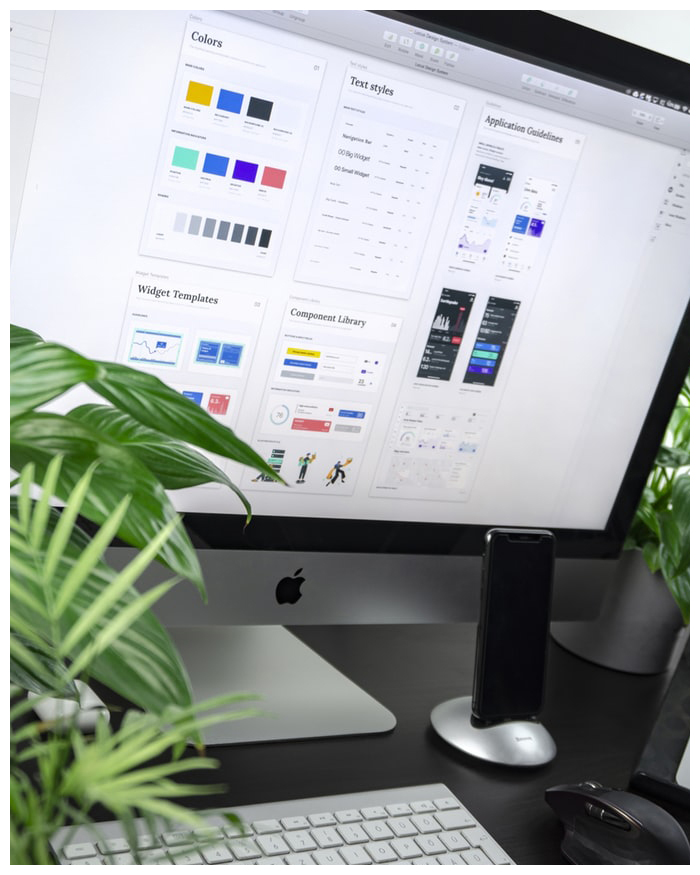
What Skills Does A Web Designer Need
Reification
Reification is the process of identifying an entity by utilising only the main sections of it. It helps you to be constrained in the style while also conveying significance.
Invariance
Invariance is the potential to use tasteful discordance in the designs to differentiate anything from a collection of identical artefacts. The usage of invariance helps one to draw attention to specific aspects of a design.
Typography
The way we perceive ideas is influenced by typography. The weight and geometry of a form convey sense, and as a writer, you must consider the right way to produce messages utilising the necessary typographic choices.
With too many font choices available, it may be difficult for new designers to decide which one to use. For body copy, practical fonts such as Georgia, Verdana, and Roboto perform well, although more artistic typefaces can be used sparingly as ornamentation. A strong designer knows the differences between form types and when to use them.
There are various tools available on the internet to help you extend your typographic expertise. FONTS IN USE demonstrates various typefaces in use through a range of media. Font combos for web designers are tools that will offer you inspiration for future pairings.

The composition
The positioning of text, pictures, and other elements serves both a creative and a practical intent. There is visual unity in a style, as well as order and hierarchy of concepts. Important material can pique our interest and look fantastic.
A well-composed architecture requires the use of comparison, negative space, and proportioned objects to achieve harmony. Take note of the style around you, such as websites, sculptures, movie scenes, and billboards. The more you become conscious of and understand good composition, the more it can appear in your own style.
Colour Theory
Easy principles, such as mixing primary colours to produce new colours, can assist you in designing appealing colour palettes.
As an artist, you can understand the colour wheel and how parallel, overlapping, and analogous colours interact with one another.
The use of clashing colours is a typical error created by amateur artists. A little visual dissonance can make for an intriguing interface, but clashing colours can make a style look messy and unreadable. Text, calls to action, and headers can all use colours that complement one another to have a good sense of legibility. Understanding and utilising lights and darks, contrast, and saturation are also essential colour skills in website design.
Understanding colour theory can take the guesswork out of colour mixing — trial and error may be time consuming. “Web design 101: colour theory” is an excellent place to begin.
Designing software
Designers should be acquainted with design software applications such as Adobe Illustrator, XD, Photoshop, Figma, and Webflow. You can appreciate the principles of picture manipulation and be able to modify vector-based icons, such as a logo, if the chance occurs.
For anyone with a tight budget, free photo-editing apps like Gimp or the vector-based Inkscape can offer you the tools you need to get the job done without breaking the bank. And, when you hone your web design abilities, animation applications such as Motion or After Effects will help you bring movement and pzazz to your work.
Then there’s the tool you’ll need to create your website. Adobe programs provide an easy-to-use gui that produces perfect code for you — we agree it is the optimal choice.
CMS stands for Content Management Framework (CMS)
A CMS can simplify the process of updating material that requires daily changes, such as blog entries, recipes, or activities. Using a content management system (CMS) to connect relevant data and configure templates would make wrangling content much simpler. Webflow has a CMS feature with models that allows you to build the content you require.
Style that is sensitive
Responsive programming is an essential aspect of the web creation phase. The responsive design standards ensure that HTML, CSS (cascading style sheets), and JavaScript features such as menus, text, and buttons are visible and accessible anywhere.
Sensitive architecture means that the material is produced reliably. It operates by providing a master layout that changes to match the computer on which it is loaded. Being sure the projects adapt on all platforms allows them to meet more users while maintaining a high level of user support. You don’t even require a web developer to carry responsive projects to life with resources like Webflow.
The User Experience (UX)
User Interface is concerned about a person’s emotional reaction to a website — a blend of a site’s accessibility and the integration of immersive and dynamic features to render the design easier to access. The purpose of UX is to mould a user’s experience by engaging them and directing them across the web.
The User Interface (UI)
Whereas UX is more concerned with the general facets of how a design impacts other, UI is more concerned with specificity. UI contains home sites, icons, menus, and micro-interactions. For a seamless experience, these components direct a viewer into a design that is free of impediments.
Graphic design
Website and graphic design also share a creative room. Both include the creative method of making graphics. However, while web design is a process in which continuous improvements and modifications are a part of every project, graphic design is concerned with designing graphics that can endure. Designing a website and designing a logo are two separate create fields, but they all fall under the umbrella of branding.
You can learn graphic design and web design online through our online graphic design course at Blue Sky Graphics.
Your ability set would be rounded out by graphic design abilities. Knowing how to produce hand-drawn typography, custom drawings, and other artistic flourishes can strengthen the web design job.









