

How Do I Prepare For A Graphic Design Interview?
When you go into an interview, it is natural for your heart to start pounding so loudly that the person across from you can hear it. Your hands will start sweating, and your stomach will feel like it is doing backflips inside you. If only there were a way to get rid of this stress. Unfortunately, there is no miracle solution for this. Still, you can do something to alleviate the discomfort: make sure you are organised in terms of how you introduce yourself, what you wear, and the types of questions you pose.
The graphic design interviewing tips and recommendations are listed below.
Make your portfolio.
It is best for a graphic designer to have both an online and a physical hard copy portfolio. Check that all of your connections are working and that all of your material is up to date with your online portfolio. It would help if you highlighted somewhere between 7 and 11 of your best pieces for your physical portfolio; these pieces should be diverse and show off your talents. It is best to begin and finish with your very best works of art. (Note: If you have drawings or explanations for how you came up with those ideas or concepts, please bring them! Employers want to see how you arrived at the final solution.)
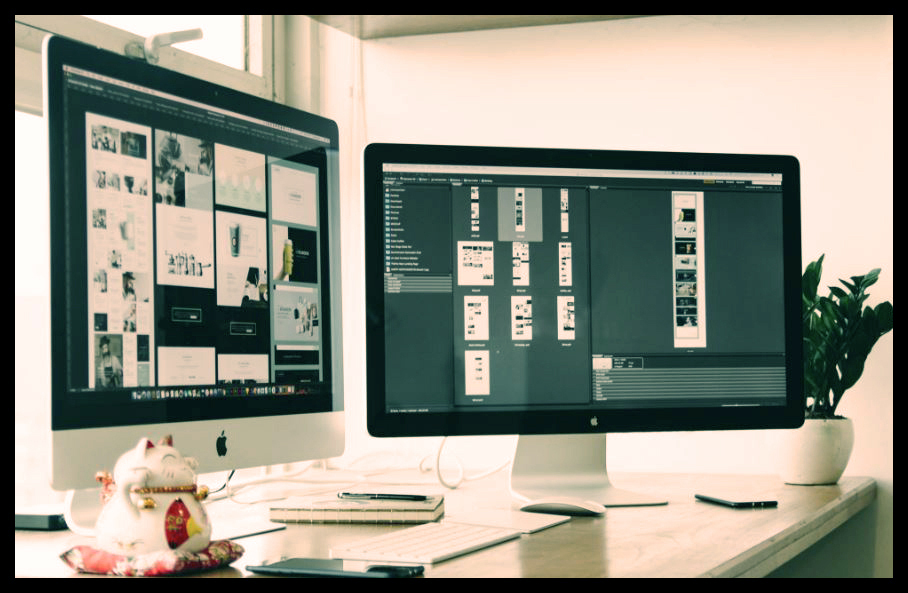
How Do I Prepare For A Graphic Design Interview
Prepare your resume and have copies on hand
Until you head for an interview, go through your resume and ensure there are no mistakes and that it is tailored to the position for which you are applying. Bring at least three professionally printed copies to the interview, even though you have already submitted them by email. Place these in the back of your portfolio and make sure always to deliver them to your interviewer.
Make your appearance ready
Yes, we know it sounds funny, but you want prospective employers to take you seriously, and facial attractiveness determines over 55 per cent of a person’s opinion within 10 seconds. The suggested apparel for graphic design interviews differs from the standard business attire. Wear something that sticks out but does not yell in their direction. If you are interviewing for a creative role, let your personality come through in your attire!
Look into the business
Quite certainly, the firm you are interviewing with has a website; take advantage of this resource! Take notes as you browse the pages. Understand what they stand for and what their company’s mission and priorities are. You never know if they would bring it up during the interview.
Arrive on schedule
Arriving late reveals something about how little you care about your work. It would be best if you planned to arrive 15 to 20 minutes early. If you believe it is too early to enter, take the time to prepare and practise in your vehicle. However, make sure you arrive at the office at least 5 to 10 minutes early. (Note: When the interviewer greets you and shakes your hand, make it strong – not knuckle crushing and not weak.)
Prepare to respond to the interviewer’s questions
It is an interview, but of course, there will be questions – and a lot of them! To start, they will ask you a set of questions designed to get to know you and your job style. Here are a few explanations of what to expect during a graphic design interview, as well as an excellent bonus question.
Have you ever been a part of a company or product launch? What things did you bring to the table, and how did you evaluate the results?
Describe a difficult team effort and how you overcame challenges.
Describe a case in which you were directly interested in solving those questions and what steps you took.
Prepare to respond to the interviewer’s questions
Describe a moment when you encountered opposition to a proposal or project that you needed executing. How did you deal with the opposition but still achieving results?
What qualities do you believe distinguish a good designer?
Aside from being a professional artist, consider if you are a well-rounded creative—emphasising the work criteria. Interpersonal skills, time management efficiency, managing various tasks, problem-solving abilities, and an eagerness to learn are some of the characteristics you would like to highlight.
Tip: After explaining the attributes that make you a great team leader, describe how your design skills will help you handle a client brief, including your method and how you will manage a project. What attributes do you believe a great designer should have, and how do you compare?
Where do you get your concept ideas?
Showcase your passions and the creatives you admire to demonstrate your talents, preferences, and curiosities. The key is to show your individuality that differs from the standard. While discussing your design heroes is appropriate, you can also take inspiration from other fields such as film, art, music, pop culture, and history.
Tip: Try to incorporate motivation that you believe would be relevant to the needs of the company. You should emphasise that you are culturally conscious and keep up with design patterns and be savvy about brand differentiation and how it aligns with market needs.
If you want to work as a group or on your own
The corporation wants to see how adaptable you are and how well you can meet the demands of a project. This is an excellent chance to showcase the benefits of all choices and demonstrate your ability to function effectively both as part of a team and on your own.
Tip: Inquire with the recruiting manager about the team composition and how their employees collaborate. You should provide examples of times that you performed successfully as part of a team and showed responsibility for a project you worked on your own. Explain why you can work alone or collaboratively with a team based on the needs of the mission.
How can you deal with strict deadlines?
Being a designer involves overseeing tasks with fast production periods. Tell us about a time-sensitive initiative you managed and how you prioritised projects. The recruiting manager is interested in learning how you treat a range of projects.
Share an example of how hitting a tight deadline on a project helps you remain focused and inspired to finish on time. Get specific about the mission you worked on, the deadlines you had to deal with, and how you hit the deadline. As artists, we understand that client deadline is always tight, and that work must be done as quickly as possible. That is why, at Blue Sky Graphics, you can study graphic design in detail where we train our students for the design industry by making them focus on real-world briefs.









