

How Much Do Graphic Design Courses Cost
Graphic art has vastly developed in recent years. It symbolises the importance of education. Given the high demand for graphic designers in the last five years, what better way to encourage you than with our hands-on expertise and in-person design consultants? Avoid leading a hectic lifestyle that would prevent you from earning a graphic design certificate. Classes are convenient and available to accommodate busy schedules. At Blue Sky Graphics, sky is the limit and here you can easily become a full-fledged graphic designer without leaving your home! Here are some graphic design skills:
1. UX design
User interface design involves controlling (or at least influencing) the user’s experience while using the product. When designing a UX you can care of how the colour scheme attracts users. How long can anyone scroll down a page? and merge it with industry standard style conventions and trends.
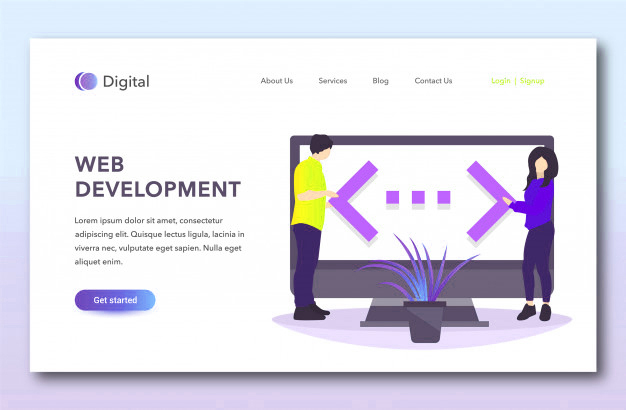
When designing a UX you can care of how the colour scheme attracts users.
2. UI architecture.
User interface design (UI) is somewhat similar to User Experience design (UX), but focuses around how designs look rather than practical design concepts. UI programmers invest a lot of time discussing the look and sound of the app, rather than how the app feels when used.
3. Information architectures
The arrangement of material on a website in favour of how it effectively presents details to the customer. When working on knowledge architecture, you can worry about what information to place on each website, how to categorise information so that visitors will locate it, and everything else relevant to how users view the material on a web.
4. Responsive nature
Two years ago, more people used smartphone internet than desktop [internet]. Web designers must consider responsive architecture and how it functions. Though not every mobile website is responsive (although there are obviously instances where a dedicated mobile platform makes much more sense than a responsive site design), learning how responsive design functions and how to design for it is key to becoming a good designer.

5. Popular structural design trends.
There are thousands of common web design styles. Users often require those features to be present on websites. Subheadings, page headers, and copyright information in the footer. Users are familiar with certain objects being placed in certain positions, and designers ought to be cautious not to disturb certain comforting patterns. To be a designer, one must be knowledgeable of the design patterns which allow the success of one’s own projects.

Typography, when it comes to the internet,
6. Graphic concept fundamentals.
Web designers must know how to produce visually attractive components that work together in a cohesive style. Similar to print design, web design applicability includes the use of symmetry, unity, hierarchy, and colour theory. If you have an eye for design you might intuitively know some of the principles, but if you want to be a designer it is crucial that you solidify the fundamentals.
7. Typography.
Typography, when it comes to the internet, encompasses not just how to pair various typefaces to build the look and feel you want in your templates, but also how web fonts function and how to use them. You must be proficient in how to choose the appropriate typefaces, how to manage sizing and scaling, and how to use webfonts for your projects.
8. Colour Theory
Colour is critical about how a blog is perceived by visitors. Changing the colour of a design will dramatically modify the visual impression the design conveys. Creating a well-balanced colour palette, that conveys the right emotions can be vital to a designer’s success.
9. Compost
The composition of a document is simply the way various elements—like headings, sidebars, etc.—are arranged within the document. Grid design concepts are essential in web design, but many websites out there do not adopt strict grid design principles. If you are unfamiliar with composition conventions, you want to be acquainted with them so you can easily use them in your own work.
10. Develop software.
You need to know how to use the necessary production resources if you want to be a successful artist. Two most popular and successful in the design industry programmes are Adobe Photoshop and Sketch. You should be proficient in one of the programmes in order to get the most from the courses. When you get more creative, you will want to explore digital graphics in Adobe InDesign and Illustrator. There are also various professional design-oriented workshops out there that you can study when you need them.
11. Communication
Design may be used for communicating. It is important to know how to successfully communicate knowledge through the projects. This is an experience that will include anything from working well with stakeholders to truly understanding a project to utilising their designs to convey a visual message.
12. User modelling
User simulation involves the development and usage of “user personas” and scenarios. That involves building an avatar of the person who would be using a site or utilising a product in order to choose the best template. It means coming up with a number of possible situations, and solving a dilemma with a certain class of person. Imagining the people who may utilise the website or product you are making ensures you will develop a template customised to them and can interact more effectively with the end consumer.
13. User checking
User checking is like the scenario that it describes. You will research products to see how well they work on real consumers. User testing is not the most complex design method, but it’s really important. Having the ability to do A/B and multivariate tests to determine how to develop the projects is a really useful capability for a designer. It can be used to prove that you have an audience!
14. Limitations
Although you can create wonderful and effective web sites, there are inherent limits. There are a number of things you can do on a mobile, but some are only possible on a desktop, and some are based on the internet (Firefox works differently than Chrome, which works differently from Internet Explorer). And certain approaches are just not yet viable. A good designer knows what the network is capable of now, what is yet to be discovered, and what a good designer should not do (for now, at least).
15. Design briefs
If you are a freelancer, an agency, or in a corporate design department, learning how to assess and consider the demands of a design is a crucial ability for a designer. If you do not understand what the design’s end consumers require and what the design’s owners want, so you can waste a LUXURY of time on needless changes (or bosses).









