

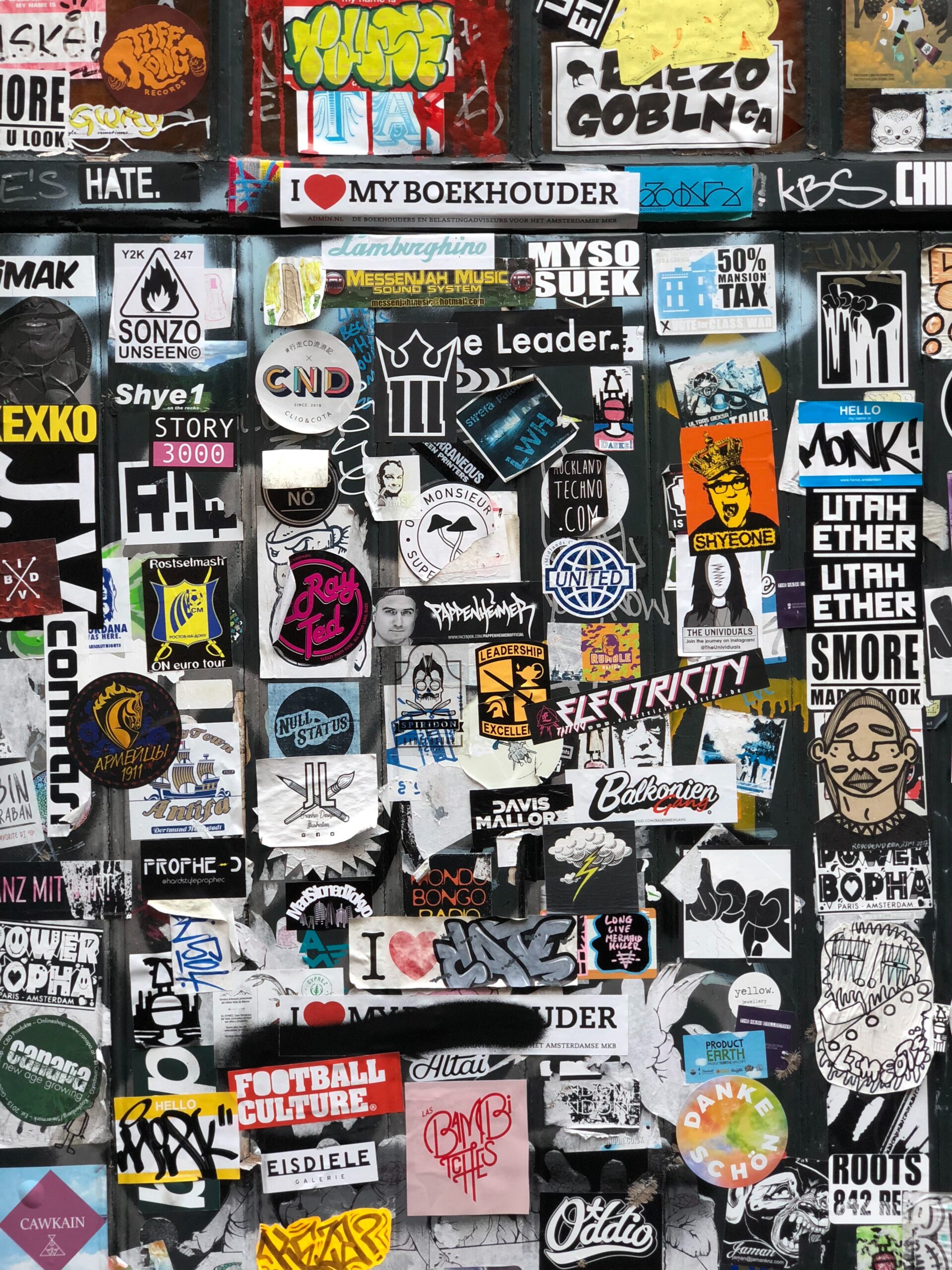
Forms of visual communication
There are many ways to communicate visually. One way is through body language, which includes facial expressions, eye contact, and gestures. Another way is through the use of symbols, such as those used in sign language. There are also various ways to communicate visually through art, including paintings, sculpture, and photography.
And finally, there is the use of written words, which can be done using different fonts, sizes, and colours.
Introduction: What is visual communication?
Visual communication is the process of creating and sharing ideas using images. It can be used to communicate messages of all kinds, from simple ideas to complex concepts. Visual communication is often used in conjunction with other forms of communication, such as verbal or written communication.
There are many different types of visual communication, including art, photography, graphic design, advertising, and film. Each type has its own strengths and weaknesses, and each can be used to communicate different types of messages.
Art is one of the oldest forms of visual communication. It can be used to communicate emotion, tell stories, or convey ideas. Art is often highly personal and can be interpreted in many ways.
Photography is another form of visual communication that has been around for centuries. It can be used to capture moments or create images that tell a story.
Types of visual communication
There are many different types of visual communication, each with their own strengths and weaknesses. Here are a few of the most common:
- Photography: Photography is perhaps the most ubiquitous form of visual communication. It can be used to capture both mundane and momentous moments, and can be used to communicate a wide range of emotions. However, photography is also open to interpretation, so it is important to be aware of your audience when using this form of communication.
- Graphic design: Graphic design is a versatile tool that can be used for everything from advertisements to logos to infographics. It is often used to communicate complex ideas in a simple and visually appealing way. However, the success of graphic design depends heavily on the skill of the designer, so it is important to choose someone who is experienced and talented.
- Illustration: Illustration is a great tool for communicating complex ideas and concepts in an easy-to-digest format. It creates a simple, relatable picture of the information being communicated, which can be used to communicate almost anything.
The role of visual communication
In our fast-paced, constantly-connected world, it’s more important than ever to be able to communicate clearly and effectively. Visual communication is a key part of this, as it can help us to get our point across quickly and efficiently.
There are many different forms of visual communication, from simple charts and graphs to more complex infographics. Whatever form it takes, visual communication can be an extremely powerful tool.
When used correctly, visual communication can help us to communicate complicated ideas in a way that is easy for others to understand. It can also be used to grab attention and make our message more memorable.
With the increasing popularity of social media and other digital platforms, the role of visual communication is only going to become more important in the years to come.
The importance of visual communication
Visual communication is the process of creating and sharing ideas using visual aids. It can be used to communicate messages that are difficult to convey in words alone, and can be an effective way to engage your audience.
Visual communication can take many forms, from simple charts and graphs to more complex infographics and presentations. When used effectively, visual communication can help you convey your message more clearly and engage your audience more effectively.
There are many benefits to using visual communication, including:
- Increased clarity: Visual aids can help make complex concepts easier to understand. They can also help provide context for textual information.
- Improved engagement: People are more likely to pay attention to and remember information that is presented visually. Adding visuals to your presentation or website can help keep people engaged.
- Improved retention: Studies show that people are more likely to remember what they see than what they read. Visual communication is also a great way to increase your credibility.
Definition: What are the different types of visual communication?
There are many different types of visual communication, but they can broadly be grouped into three categories: verbal, non-verbal, and written.
Verbal communication includes face-to-face conversation, phone calls, video calls, and presentations. Non-verbal communication includes body language, facial expressions, and eye contact. Written communication includes emails, letters, memos, and reports.
Each type of visual communication has its own set of advantages and disadvantages. For example, verbal communication is great for building relationships but can be easily misinterpreted. Non-verbal communication is often more accurate than verbal communication but can be difficult to control. Written communication is a good way to document ideas and communicate with people who are not in the same room but can be time-consuming to create.
The best way to communicate depends on the situation and the message you are trying to send.
The role of visual communication in society
In our increasingly visual world, it’s more important than ever to have a strong understanding of visual communication. Whether we’re creating or interpreting images, visuals are a key part of how we communicate and interact with the world around us.
There are many different forms of visual communication, from body language and facial expressions to gesturing and sign language. We also use visuals to express ourselves through art, fashion, and design. And in the digital age, we’re constantly interacting with visuals through screens and social media.
Visuals are a powerful way to communicate because they can convey messages quickly and efficiently. They can also be very emotive, evoking feelings and reactions that words alone might not be able to achieve. In our fast-paced, constantly-connected world, visual communication is more important than ever before.
The advantages and disadvantages of visual communication
There are many forms of visual communication, each with its own advantages and disadvantages.
One form of visual communication is body language. Body language can be very helpful in conveying messages, but it can also be easily misinterpreted. Another form of visual communication is facial expressions. Facial expressions can be very effective in conveying emotions, but they can also be difficult to control.
Another popular form of visual communication is sign language. Sign language is a very effective way to communicate with people who are deaf or hard of hearing. However, it can be difficult to learn for people who are not familiar with it.
Visual communication can be a very powerful tool, but it is important to choose the right form of visual communication for the situation.
How body language can be used to communicate
Body language can be a powerful form of communication. It can be used to express emotions, convey messages, and create rapport. When used effectively, body language can help you build relationships, resolve conflict, and increase your overall communication effectiveness.
Some common forms of body language include:
Facial expressions: The face is the most expressive part of the body and can convey a wide range of emotions. From a simple smile to a deep frown, our faces communicate our innermost thoughts and feelings.
Eye contact: Eye contact is an important form of non-verbal communication. It can convey interest, trustworthiness, and confidence. When making eye contact with someone, it is important to maintain a relaxed and natural gaze.
Posture: Our posture speaks volumes about our emotions and state of mind.
The role of colour in visual communication
Colour is one of the most important elements of visual communication. It can be used to convey a message, create an atmosphere, or set a mood. It can also be used to grab attention, contrast information, and add visual interest.
Colour has the ability to influence our emotions and perceptions. It can make us feel happy or sad, excited or relaxed. Different colours can even evoke different feelings in different people. That’s why it’s so important to choose the right colours when designing anything from a website to a product label.
The wrong colour choice can communicate the wrong message or turn off potential customers. But when used correctly, colour can be a powerful tool for businesses and organisations.
How comic books convey messages and stories
Comic books are one of the most popular forms of visual communication. They are a unique blend of pictures and words that tell a story. Comic books have the ability to convey messages and stories in a way that is both entertaining and enlightening.
Comic books often deal with controversial topics, such as violence, crime, and drugs. They can be used to teach lessons about right and wrong, and to raise awareness about important issues. Comic books can also be used simply to entertain, providing enjoyable stories for readers of all ages.
Despite their often serious subject matter, comic books are usually light-hearted and fun. They are an enjoyable way to spend some free time, and they can be a great source of entertainment for the whole family.
How infographics can be used to explain complex topics
Infographics are visual representations of information, data, or knowledge. They can be used to communicate complex topics in a way that is easy to understand and remember. Infographics can be used to explain concepts, processes, and relationships.
Infographics can be used to explain complex topics by breaking them down into smaller, more manageable pieces. By using images, colours, and text, infographics can communicate information in a way that is both visually appealing and easy to understand. When used correctly, infographics can make complex topics more accessible and easier to learn about.
The history and evolution of the emoji
The first emoji was created in 1999 by Shigetaka Kurita, who was working on developing i-mode, a mobile internet platform for Japanese cell phone users. The emoji were designed to be small enough to fit into a 12×12 pixel space, and to convey emotion or feeling without using words.
The original set of 176 emojis included symbols for things like weather, traffic, and food, as well as facial expressions like happy, sad, and angry. Since then, the emoji have been adopted by Unicode (the universal standard for character encoding) and are now used globally.
There are over 3,000 different emojis available today, ranging from smiley faces to animals to national flags. And new emojis are added each year, based on popular culture or trends.
New ways to see: Different forms of visual communication
There are many ways to see things, but sometimes we need to change our perspective in order to really understand what we are looking at. Different forms of visual communication can help us do this.
For example, data visualisation is a form of visual communication that helps us make sense of large amounts of information. By breaking down data into graphical forms, we can more easily see patterns and relationships that would be difficult to spot otherwise.
Another way to change our perspective is through optical illusions. These tricks of the eye can reveal hidden images or patterns that our brain would normally overlook. Optical illusions remind us that there is often more to what we see than meets the eye.
Finally, art can also be a form of visual communication. By looking at art, we can gain a new understanding of the world around us.
How we communicate: A look at various forms of visual communication
There are many ways that we communicate with one another. Sometimes we use words, and sometimes we use body language. But there are also other ways to communicate, like through art or music. In this article, we’ll take a look at some of the different forms of visual communication.
One way to communicate visually is through art. This can be anything from painting and sculpture, to photography and architecture. Art can be used to express emotions, tell stories, or convey ideas.
Another way to communicate visually is through film and television. Film and television can be used to entertain, educate, or inform. They can also be used to raise awareness about important issues.
Finally, there is digital communication. This includes things like websites, social media, and apps. Digital communication has become increasingly important in our world today.
Seeing is believing: An exploration of visual communication
Seeing is believing is an old saying that is often used in relation to visual communication. This means that people are more likely to believe what they see, rather than what they hear. This is because visuals are more concrete and easier to process than words.
There are many different forms of visual communication, such as body language, facial expressions, and gestures. These all convey meaning without the use of words. Body language can be used to show emotions, feelings, and attitudes. It can also be used to communicate messages non-verbally. Facial expressions are another form of non-verbal communication that can reveal a person’s inner thoughts and emotions. Gestures are also a form of non-verbal communication that can be used to express ideas, thoughts, and feelings.
Visual communication is a powerful tool that can be used to communicate messages effectively without the use of words.
How to use visual communication to your advantage
There are many ways to use visual communication to your advantage. One way is to use colour to your advantage. colour can be used to set the mood of a piece, or it can be used to make a statement. Another way to use visual communication is through the use of shapes and patterns. Shapes and patterns can be used to create interest and add visual appeal. Finally, texture can also be used as a tool in visual communication. Texture can add depth and interest, and it can also be used to create a feeling of luxury or sophistication.
When using visual communication, it is important to keep in mind the audience you are trying to reach. Different techniques will work better for different audiences. For example, if you are trying to communicate with a young audience, you may want to use brighter colours and more energetic shapes.
The importance of visual communication in business
When it comes to business, communication is key. And while verbal communication will always be important, the importance of visual communication is on the rise. In a world where we are constantly bombarded with images and information, it’s more important than ever for businesses to communicate effectively through visuals.
There are countless ways to incorporate visual communication into your business. From using infographics to convey complex information in a digestible way, to utilizing design elements to make your brand more recognizable, the options are endless. And with so many platforms now available for businesses to reach their audiences (Facebook, Instagram, Snapchat, etc.), there’s no excuse not to get creative with your visuals.
The bottom line is that in today’s fast-paced world, visual communication is an essential tool for any business that wants to stay ahead of the competition.
Types of communication
Body language
Body language is a form of non-verbal communication in which physical behaviours, such as posture, gestures, and facial expressions, are used to convey messages. It can be used to complement or replace verbal communication.
Body language is thought to originate from the need to communicate without using words, which would be impossible in certain situations, such as when hunting or during battle. It is also thought to be a holdover from our animal ancestors. Studies have shown that even primates use some forms of non-verbal communication.
During human evolution, body language became more complex as we developed the ability to express more emotions. Today, we continue to rely on body language to communicate both verbally and non-verbally.
Sign language
Sign language is a form of communication that uses visual cues, such as hand gestures and body language, to communicate. It is often used by people who are deaf or hard of hearing, but it can also be used by people who can hear but cannot speak. There are many different sign languages in use around the world, and each has its own grammar and vocabulary.
Some sign languages are based on the spoken languages of their users, while others have developed independently. For example, American Sign Language (ASL) is based on English, while British Sign Language (BSL) is not. There are also signed versions of some spoken languages, such as Signed Exact English (SEE) and Signed Portuguese.
Most sign languages make use of space to convey meaning.
Facial expressions
Facial expressions are a form of non-verbal communication. They can be used to convey a wide range of emotions, from happiness and love to anger and fear.
People often use facial expressions to communicate their feelings without saying a word. For example, someone might raise their eyebrows to show they’re surprised, or furrow their brows to indicate they’re angry.
Facial expressions are an important part of social interactions, as they can help people understand each other’s emotions and respond accordingly. For instance, smiling is usually seen as a sign of friendliness, while frowning may signal that someone is upset or unhappy.
While most facial expressions are universal, some cultures may interpret them differently. For example, in some Asian cultures, it is considered rude to show teeth when smiling.
The future of visual communication
In the past, visual communication was limited to print media and hand-drawn illustrations. But with the advent of digital technology, visual communication has taken on a whole new meaning. Today, visuals are created using computers and graphic design software, and they can be shared instantly with people all over the world via the internet.
The future of visual communication is likely to be even more exciting and innovative than it is today. With advances in technology, we will be able to create ever-more realistic and lifelike visuals. We will also be able to make use of virtual reality and augmented reality to create truly immersive experiences that allow us to interact with visuals in a completely new way.
It is clear that visual communication is evolving rapidly and will continue to do so in the years to come.
Check out Blue Sky Graphics online design school to learn more about visual communication!









